
Ask anyone to picture the ultimate dream home, and two words come up faster than any others: villa and mansion. Both conjure visions of private pools, lush gardens, architectural grandeur, and a life lived entirely on your terms. But while they share the language of luxury, a villa and a mansion are fundamentally different expressions of what it means to live well, different in philosophy, scale, cost, location, maintenance, and the kind of life they are built to deliver.
This guide gives you a complete, clear understanding of both so that when the time comes to make your most significant residential decision, you make it with absolute clarity.
What Is a Mansion?
The word “mansion” derives from the Latin “mansio”, a place to stay and a significant dwelling, and it has carried the weight of that definition across centuries. In European and British history, the mansion was the primary residence of the landed aristocracy: large, formal, architecturally imposing, and designed to announce its owner’s status and generational wealth to every visitor.

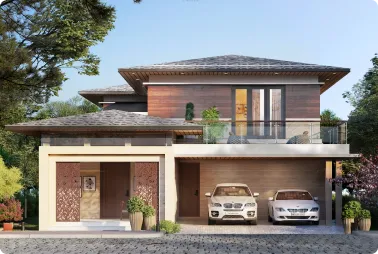
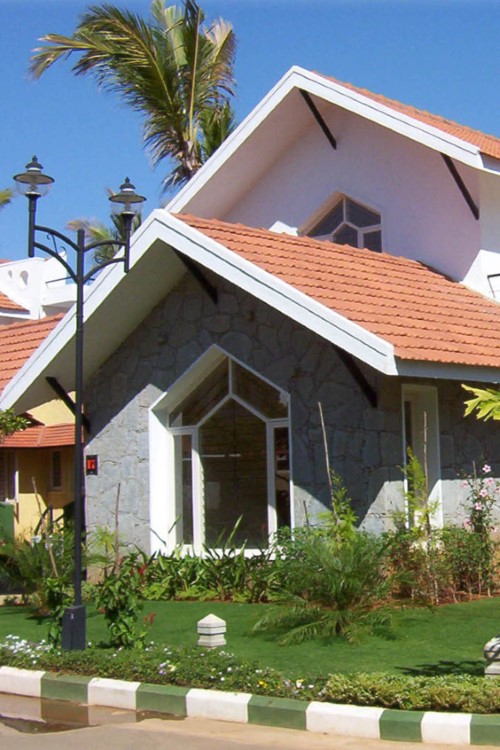
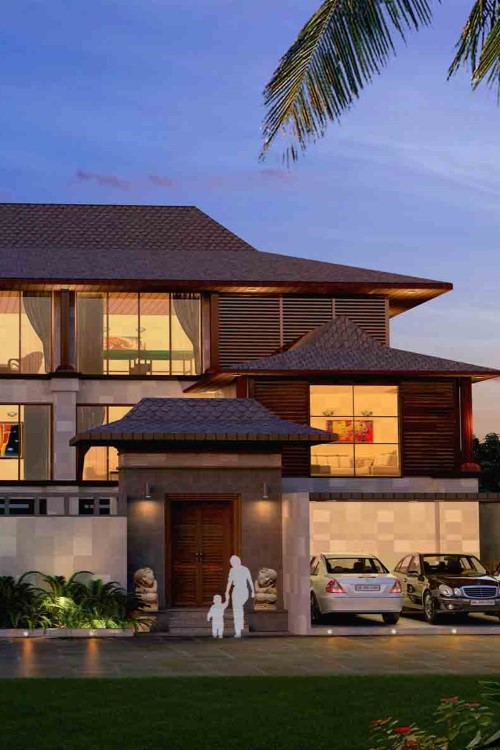
A Typical Mansion
In modern real estate, a mansion is primarily defined by its size. The minimum threshold in the US market is 8,000 sq. ft., but the most distinctive mansions typically range from 12,000 to 20,000 sq. ft. and beyond, with multiple wings, soaring entrance halls, formal dining rooms, ballrooms, separate staff quarters, and private grounds of one to ten or more acres. A mansion is not just a large home. It is a private estate, fully independent, with no shared walls, shared ownership, or community infrastructure. Every amenity, every security system, and every square foot of grounds is the owner’s sole domain, sole responsibility, and sole privilege.
Key Characteristics of a Mansion
| Characteristic | Detail |
| Minimum Size | 8,000 sq. ft.: typically 12,000 to 20,000+ sq. ft. |
| Floors | 3 or more stories |
| Bedrooms | 6 to 12+ |
| Bathrooms | 7 to 15+ |
| Private Land | 1 to 10+ acres |
| Staff Facilities | Separate staff wing, service entrance, staff kitchen |
| Architectural Style | Classical, Victorian, Baroque, Neo-Colonial, custom |
| Location | Ultra-premium urban districts or exclusive private estates |
| Ownership | Fully private: complete, unrestricted land and structure |
What Is a Villa?
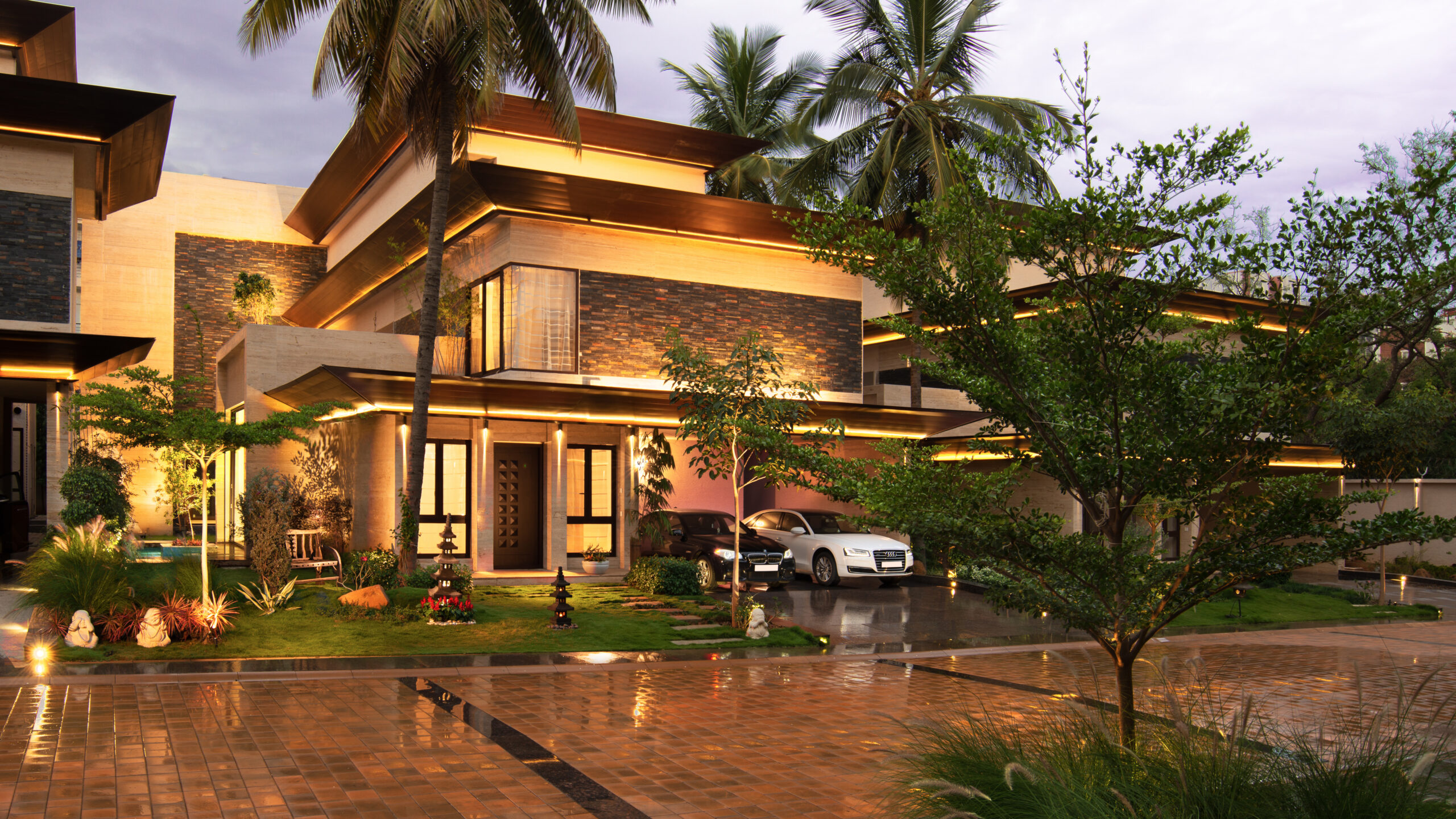
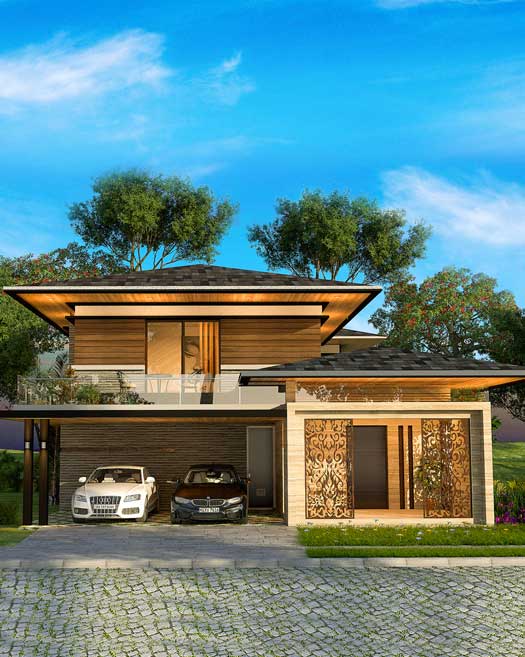
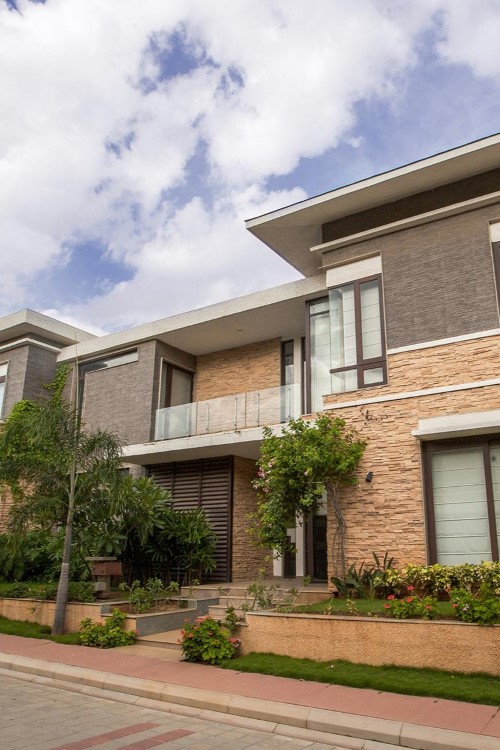
A villa is a premium independent or semi-independent residence, typically G+1 or G+2 in format, known for its warm, resort-quality character, distinctive architectural identity, and placement within a well-planned gated community. Where a mansion announces itself with grandeur, a villa draws you in with warmth. Where a mansion impresses, a villa invites you to live deeply, comfortably, and joyfully every single day.

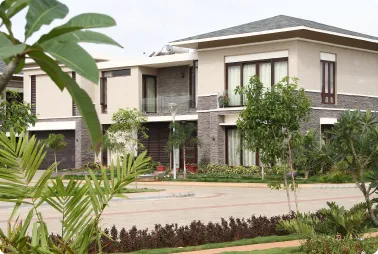
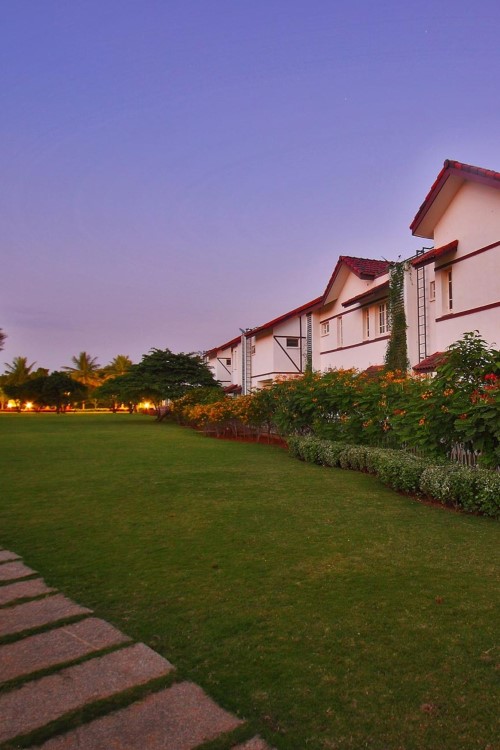
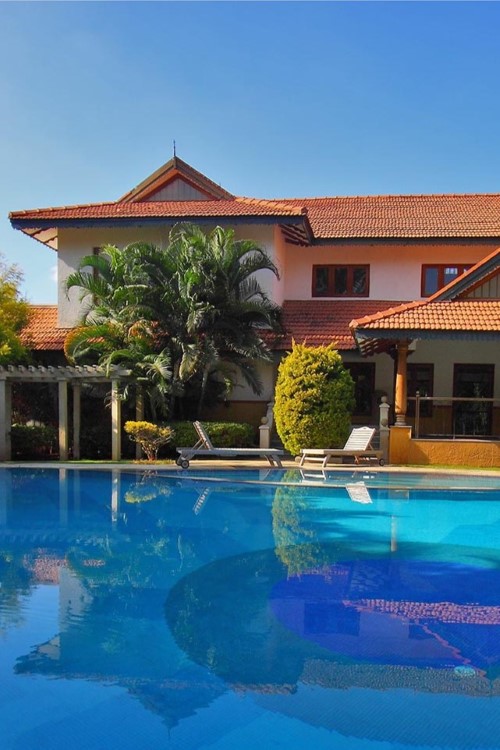
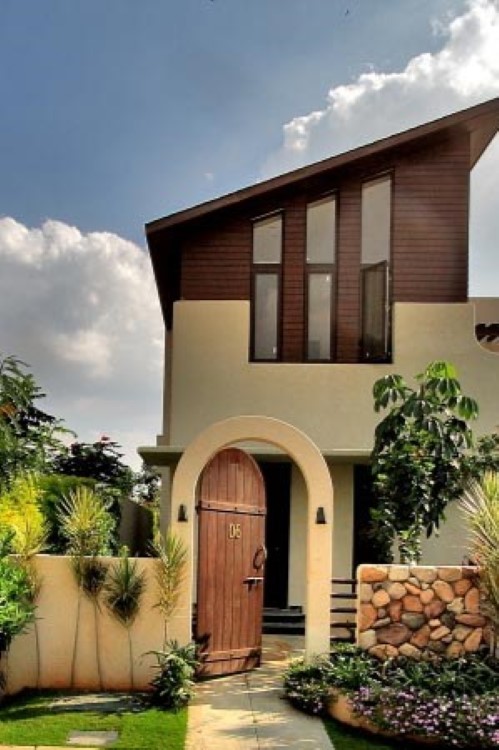
Chaithanya Samarth, Budigere Cross, Bengaluru
Key Characteristics of a Villa
| Characteristic | Detail |
| Typical Size | 2,500 to 8,000 sq. ft. |
| Floors | G+1 or G+2: 1 to 2 stories |
| Bedrooms | 3 to 5 |
| Bathrooms | 3 to 6 |
| Land | ¼ to 1 acre within gated community |
| Architectural Style | Mediterranean, Bali, Zen, Tropical, Tudor, South Indian |
| Key Amenities | Private garden, pool + shared: clubhouse, gym, sports courts |
| Community Setting | Premium gated community, professionally managed |
Villa vs Mansion: The Master Comparison
| Dimension | Villa | Mansion |
| Size | 2,500 to 8,000 sq. ft. | 8,000 to 20,000+ sq. ft. |
| Floors | 1 to 2 stories | 3 to 5+ stories |
| Bedrooms | 3 to 5 | 6 to 12+ |
| Land Area | ¼ to 1 acre | 1 to 10+ acres |
| Architectural Character | Warm, resort-quality, intimate | Grand, imposing, statement-making |
| Layout Philosophy | Open-plan, fluid indoor-outdoor | Compartmentalised, purpose-specific rooms |
| Amenities | Private garden + shared community infrastructure | Fully private: ballroom, theatre, wine cellar, stables |
| Security | Gated community: institutional 24×7 | Owner-managed private security staff |
| Maintenance | Community-managed + personal interior only | The owner is responsible for entire property and grounds |
| Staff Required | Minimal: community handles most | Full-time: housekeeper, chef, gardener, guards |
| Starting Price (India) | ₹1.5 Cr to ₹11.35 Cr+ | ₹15 Cr to ₹200 Cr+ |
| Best Investment Horizon | 3 to 10 years | 10+ years |
Architecture and Design: Warmth vs Grandeur
This is the most intellectually interesting dimension of the villa vs mansion comparison and the one that most clearly reveals what each format is actually designed to feel like.
| Design Element | Villa | Mansion |
| Historical Inspiration | Mediterranean, Roman, Balinese, Zen, Colonial | Victorian, Classical, Baroque, Neo-Gothic |
| Facade Character | Warm, human-scaled, inviting | Imposing, symmetrical, theatrical |
| Ceiling Heights | 10 to 14 ft.: generous and comfortable | 16 to 30 ft.: dramatic and soaring |
| Indoor-Outdoor Flow | Central design principle | Secondary: grandeur is interior-focused |
| Natural Light | Maximised: large windows, open courtyards | Dramatic but not always maximised |
| Material Palette | Natural stone, timber, terracotta, warm textures | Marble, limestone, gilded detailing, ornate carvings |
| Emotional Character | Relaxed, resort-like, liveable | Formal, prestigious, theatrical |
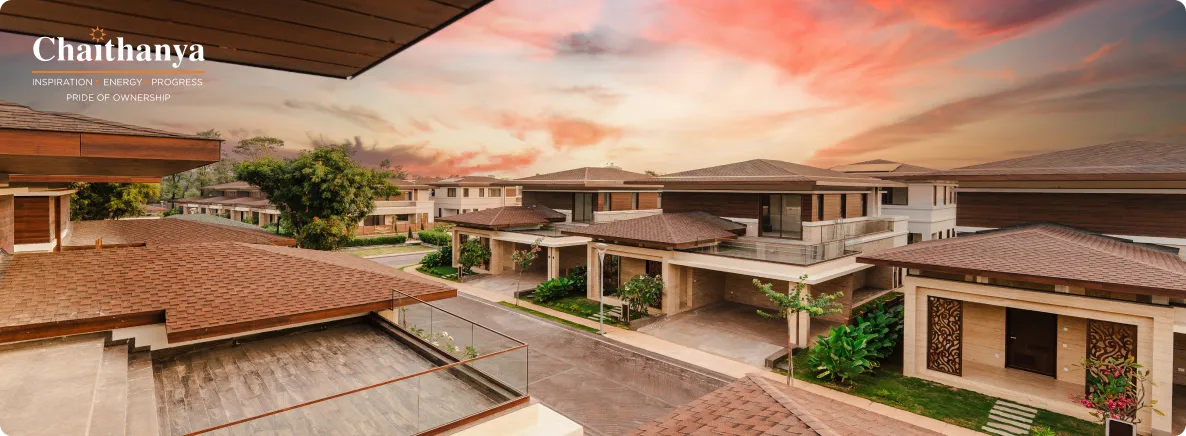
The villa’s design philosophy is built around intimacy, warmth, and connection between spaces, between residents, and between the home and its natural surroundings. Large windows, open terraces, private gardens, and internal courtyards are structural vocabulary, not decorative choices. The flow from living room to dining to garden to pool is seamless and natural.

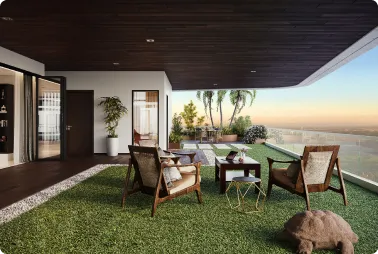
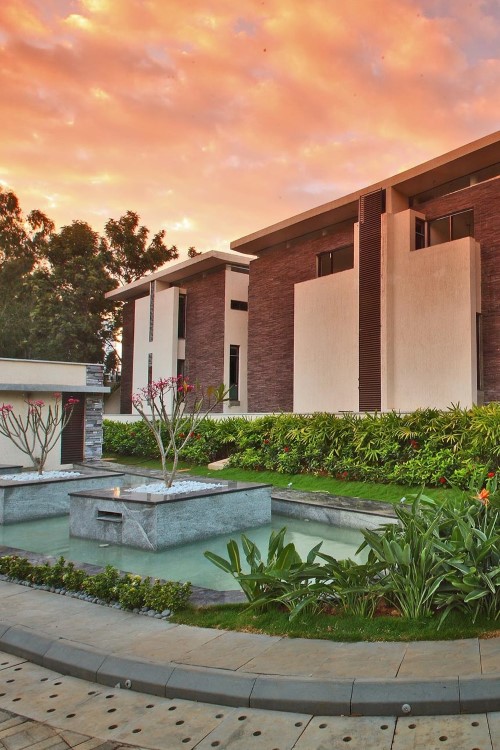
Open Terrace in a Typical Chaithanya Samarth Villa
The mansion’s design philosophy is built around grandeur, status, and the theatrical experience of space. The home is designed to impress guests as much as to shelter residents. Grand staircases, soaring entrance halls, formal dining rooms seating 20 or more, ballrooms, and library wings serve a social and reputational function alongside a residential one. The emphasis is on designated, purpose-specific rooms: a drawing room used only for receiving important guests and a formal dining room used only for formal dinners.
A Typical Living Room in a Mansion
Amenities and Features: Private Estate vs Curated Community
| Amenity Category | Villa | Mansion |
| Swimming Pool | Private pool or shared community pool | Private pool: often multiple (indoor + outdoor) |
| Gymnasium | Shared community professional gym | Private, fully-equipped home gym |
| Entertainment | Community mini theatre + private lounge | Private home theatre, ballroom, game room |
| Sports | Community tennis, badminton, squash, cricket nets | Private tennis court, basketball court, stables |
| Dining | Private dining room + community event spaces | Formal dining (20+ seats), chef’s kitchen, butler’s pantry |
| Wine | Rare: select high-end villas only | Wine cellar and tasting room: standard |
| Staff Facilities | Community-managed; minimal on-site staff needed | Separate staff quarters with independent access |
| Outdoor Space | Private garden, courtyard, terrace, pool deck | Formal gardens, fountains, lawns, guest houses |
| Smart Home | Lighting, climate, security, EV charging | Full building management systems, custom automation |
What a mansion offers that a villa typically does not:
- Ballroom or grand entertainment hall for 100+ guests
- Dedicated wine cellar and private tasting room
- Separate staff wing with independent service access
- Indoor swimming pool in addition to outdoor pool
- Multiple guest suites functioning as independent mini-residences
What a villa offers that a mansion typically does not:
- The warmth and intimacy of a resort-quality home, genuinely comfortable for daily family life
- A curated community of like-minded, high-achieving neighbours
- Professionally managed shared amenities at a fraction of the private cost
- Zero burden of managing full-time household staff
- A distinctive architectural identity: Zen, Balinese, Tudor, Tropical, that gives the home a personal character

Cost, Maintenance, and Running Expenses
Purchase Price Comparison
| Market | Villa Price Range | Mansion Price Range |
| Bangalore, India | ₹1.93 Cr to ₹11.35 Cr | ₹15 Cr to ₹100 Cr+ |
| Mumbai, India | ₹5 Cr to ₹30 Cr | ₹50 Cr to ₹500 Cr+ |
| Dubai, UAE | AED 3M to AED 20M | AED 50M to AED 200M+ |
| London, UK | £1M to £8M | £10M to £100M+ |
Villa or Manion: What Should You Choose?
Choose a Villa If You:
- Want resort-quality luxury in an intimate home designed for genuine daily comfort
- Are an HNI, UHNI, or NRI seeking a premium gated community with professional security and management
- Prefer a home that is warm, liveable, and resort-like rather than grand, formal, and theatrical
- Want to manage minimal maintenance while living in a beautifully managed community
- Value strong investment appreciation with RERA clarity and broad resale liquidity
- Have a family to house beautifully and require 3 to 5 bedrooms, with private garden, excellent facilities catering to your family’s lifestyle needs

Typical Gazebo: Chaithanya Samarth Community
Choose a Mansion If You:
- Are building a generational legacy estate, a property to pass across multiple generations
- Want the ultimate expression of architectural grandeur and social prestige
- Need to entertain on a grand scale: ballrooms, formal dining for 20+, reception halls for 100+
- Have the resources to employ and manage a full-time professional household staff
- Want a fully private, standalone estate with no shared community infrastructure or RWA guidelines
- Are building a fully bespoke, custom-designed home, every detail specified to exact personal vision
- Have a 10+ year investment horizon and are acquiring a long-term wealth
Conclusion
The villa vs mansion decision is not about which is objectively superior; it is a values alignment question that depends entirely on what you want your home to feel like, how you want to live every day, and what role the property is meant to play in your life and legacy.
A villa is the intelligent choice for the buyer who wants the finest daily life, resort quality, architecturally distinctive, professionally managed, community-enriched, and investment-strong lifestyle without the operational complexity, cost burden, and social formality of a full private estate. It is a home built for living, not just for owning. It is warm where a mansion is grand; intimate where a mansion is imposing; and efficiently managed where a mansion demands a dedicated team.
A mansion is the ultimate choice for buyers who prioritise scale, grandeur, full privacy, and the construction of a generational legacy estate and who have the resources, household staff, and long-term commitment to meet the genuine requirements of mansion ownership. A mansion is not a home you simply move into. It is a responsibility, a statement, and a legacy that you build and curate over decades.
Most buyers who love the idea of a mansion discover, on reflection, that what they truly want is the finest villa available, the spaciousness, the privacy, the quality, and the grandeur of a genuinely premium residence, without the complexity of running a private estate. The best luxury villas in India’s premium gated communities already deliver exactly that.