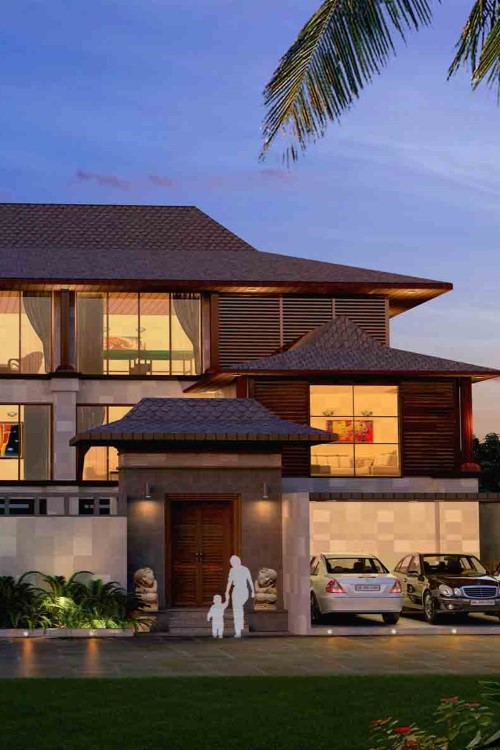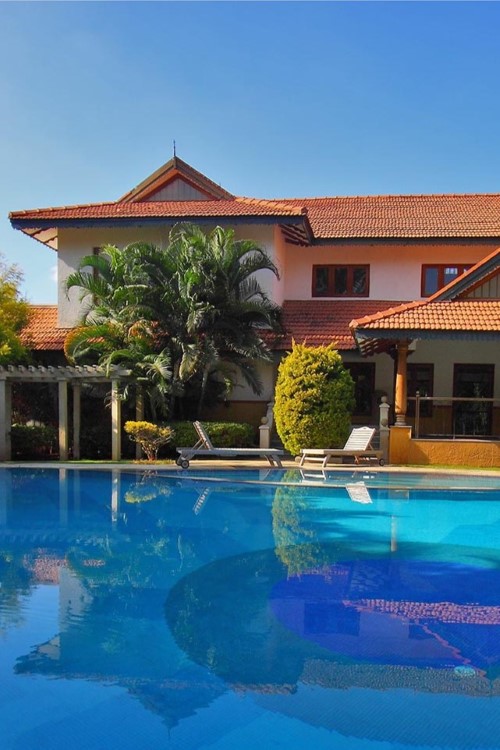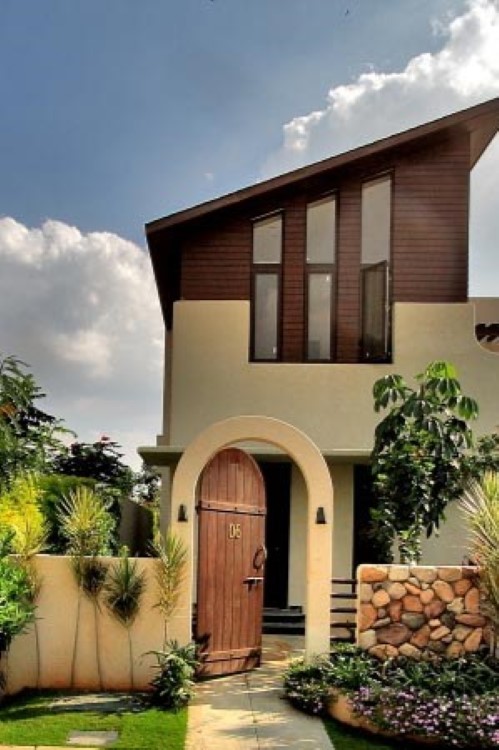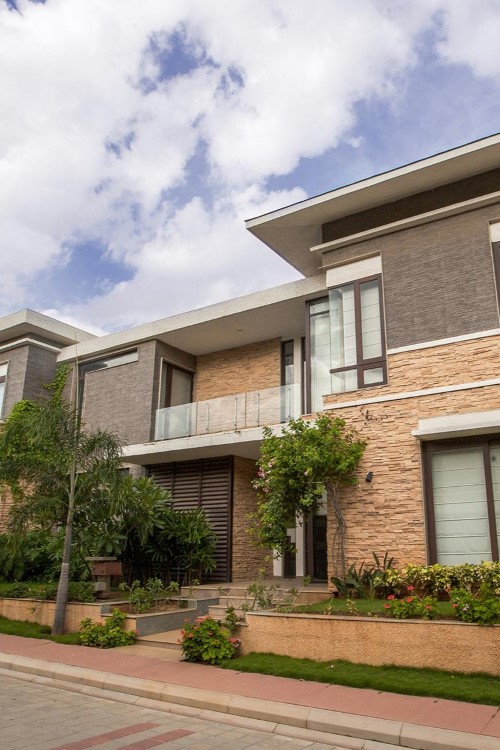


When you picture your ideal home in India’s fastest-growing cities, two images compete for attention. The first is a sleek, high-rise apartment: urban, connected, low-maintenance, and efficiently designed for a busy modern life. The second is a private villa, spacious, independent, green, and designed for the kind of life where every morning feels like a resort stay. Both are real. Both are compelling. And the choice between them is one of the most consequential residential decisions any Indian homebuyer will make in 2026.

This guide gives you every dimension of that decision, clearly, honestly, and completely.
Villa vs Apartment: At a Glance
Feature | Villa | Apartment |
Structure | Independent building on private plot | Unit within a multi-storey building |
Ownership | Full land and structure ownership | Unit plus undivided share of land |
Typical Size | 2,500 to 8,000+ sq. ft. | 900 to 3,500 sq. ft. |
Privacy | Very high: no shared walls, floors, ceilings | Moderate: shared walls, corridors, lifts |
Private Outdoor Space | Dedicated garden, terrace, courtyard | Shared podium or small balcony only |
Customisation | Full freedom to modify and expand | Restricted: no structural changes |
Location | Suburban gated communities | Urban and well-connected corridors |
Entry Price (Bangalore) | ₹1.5 Cr to ₹11.35 Cr+ | ₹40 L to ₹5 Cr+ |
Capital Appreciation (3 yr) | 40% to 144% in premium corridors | 20% to 60% |
Rental Yield | 2.5% to 3.5% | 3% to 4.5% |
Resale Liquidity | Moderate niche buyer pool | Higher: broader buyer pool |
Best For | Families, HNIs, NRIs, privacy-seekers | Urban professionals, first-time buyers, investors |
Space and Layout: The Most Visible Difference
The space gap between a villa and an apartment is not just a matter of square footage. It is the spatial quality, the private outdoor access, and the multi-floor zoning logic that makes a villa feel fundamentally different from even the largest apartment.
Size Comparison
| Metric | Villa | Apartment |
| Size Range | 2,500 to 8,000+ sq. ft. | 900 to 3,500 sq. ft. |
| Bedrooms | 3 to 5+ across multiple floors | 1 to 4 BHK on a single floor |
| Floors | G+1 or G+2: private multi-level living | Single floor within the building |
| Private Outdoor Space | Dedicated garden, terrace, pool deck | Shared podium or small balcony |
| Parking | Dedicated covered parking within compound | Stilt or basement: shared or allotted |
| Study or Work Zone | Dedicated room(s) with no bedroom sacrifice | Space-dependent: typically sacrifices a bedroom |
Key layout advantages of a villa:
- The ground floor delivers the family’s social world: living, dining, open kitchen, guest suite
- The first floor delivers the private sanctuary: master suite, children’s bedrooms, family lounge
- Every generation gets their own zone: grandparents on the ground floor, parents and children above
- A private garden provides exclusive outdoor access no apartment balcony can replicate

Key layout advantages of an apartment:
- Single-floor layouts are more accessible for seniors and those with mobility considerations
- Efficient floor plans maximise usable space within compact footprints
- No stair management, important for elderly residents and young children
- A lower floor area means lower utility consumption per square foot

Privacy and Security: Independent vs Shared Living
The difference in privacy between villa and apartment living is fundamentally structural. In a villa, you own the entire structure and land, so there are no neighbours above, below, or adjacent unless you choose them. Sound travels only through walls you control, sightlines are shaped by your boundary walls and landscaping, and your daily routines remain entirely your own with no shared corridors or unannounced visits. Security relies on private compound walls, gated entries, and personalised systems, giving you complete control over who enters your space.
Security Comparison
| Security Element | Villa (Gated Community) | Apartment |
| Entry Control | Biometric and manned 24×7 gated access | Building lobby intercom and CCTV |
| CCTV Coverage | Community perimeter and common areas | Stairwells, lifts, lobby |
| Security Staff | Community-managed : always present | Building-level guards |
| Individual Layer | Private compound gate plus front door | Apartment door only |
- Apartments offer multi-layered building security that many buyers find reassuring and convenient
- Villas in gated communities offer equivalent or stronger security with the added buffer of a private compound
- For families with young children, the villa’s private garden means children play freely without sharing outdoor space with hundreds of other residents
Amenities and Lifestyle Infrastructure
Full Amenity Comparison
| Amenity | Villa (Gated Community) | Apartment |
| Swimming Pool | Shared community or private per villa | Shared: typically 1 per building or tower |
| Gymnasium | Shared professional community gym | Shared: per building or podium |
| Clubhouse | Large community clubhouse (3,000 to 35,000 sq. ft.) | Building or podium clubhouse |
| Sports Courts | Tennis, badminton, squash, cricket nets | Tennis and badminton in premium projects |
| Children’s Play | Dedicated zones plus private garden | Shared podium or play areas |
| Jogging and Walking | Landscaped community trails through green zones | Internal podium jogging track |
| Private Garden | Every villa: exclusive use | Not available |
| Pet Zones | Dedicated zones in premium communities | Variable: not always available |
What apartments offer that villa communities may not:
- Higher density of use, more residents means amenities are more intensively staffed
- Convenience retail, laundromats, and pharmacy integrated into large apartment podiums
- EV charging, concierge services, and smart building systems increasingly standard in premium apartments
What unique features do villas offer that apartments never can?
- A private garden exclusively yours, not shared with 200 other families
- Boutique community scale of 20 to 200 units where every amenity feels personal, never crowded
- A curated, like-minded resident community rather than a high-density anonymous building

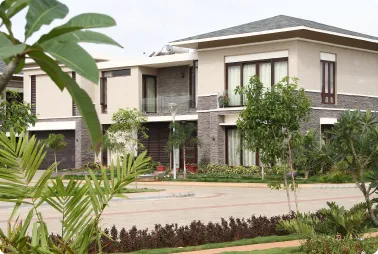
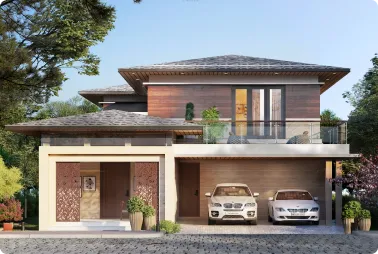
Chaithanya Samarth, Budigere Cross, Bengaluru
Chaithanya Samarth
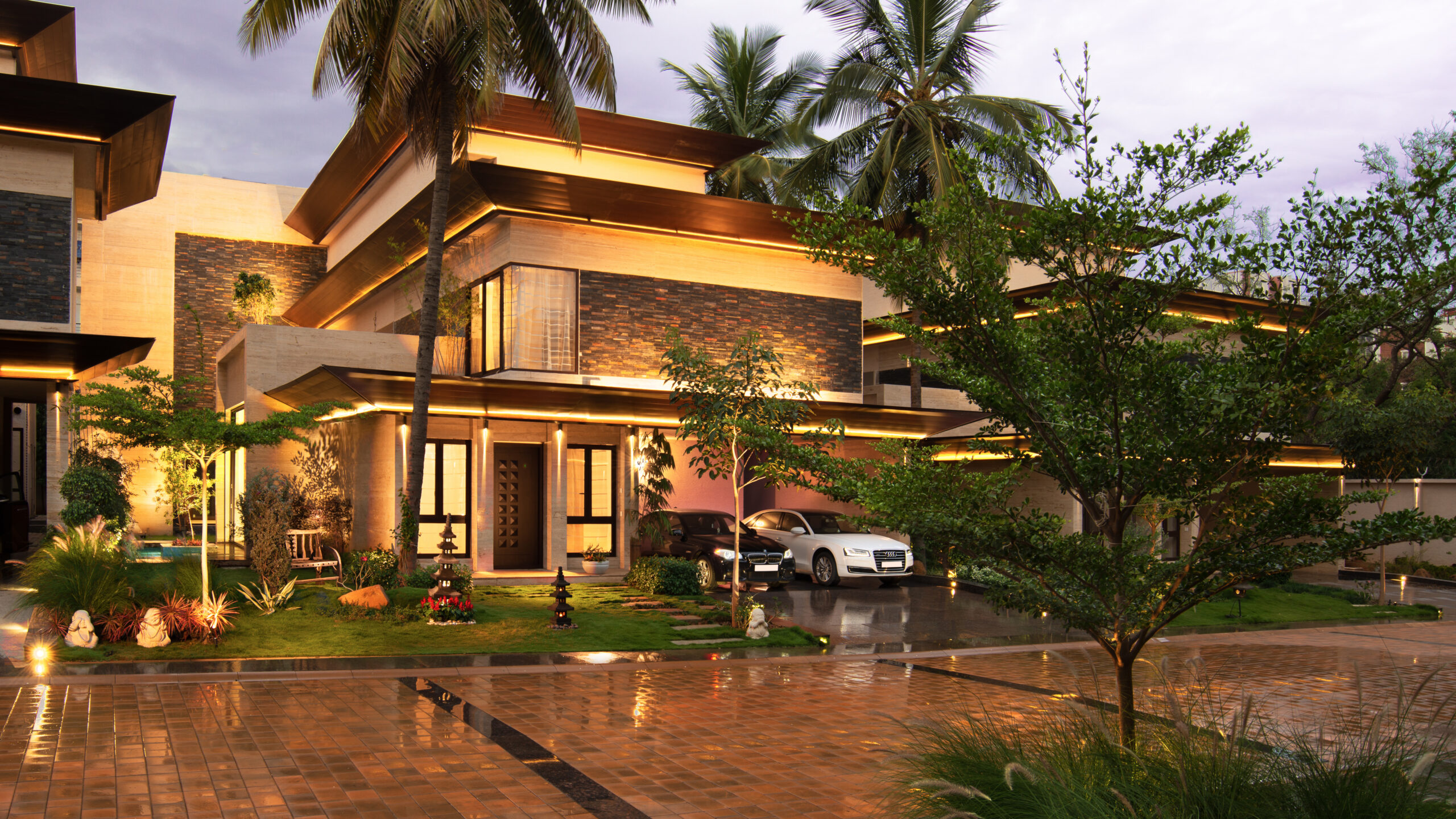
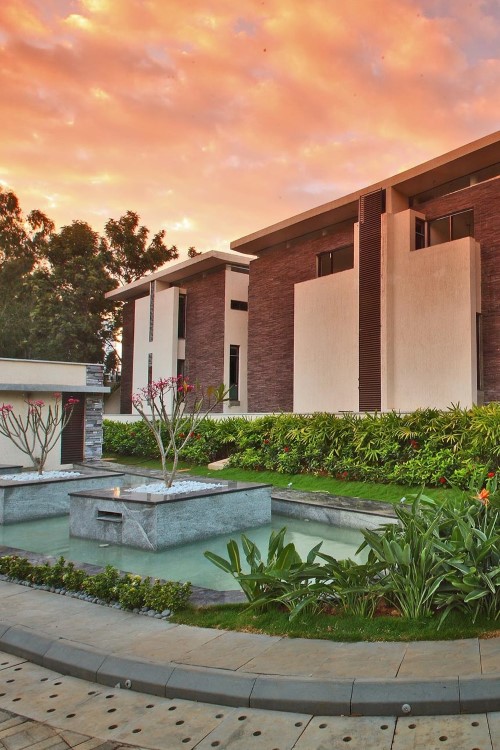
A 36-acre sanctuary in Budigere Cross featuring 163 solar-powered villas designed around sustainability and well-being. The tropical resort-style villas are surrounded by open spaces, parks, and four expansive green islands. For some it’s a resort, for others a naturalist’s dreamscape, and for the fortunate few, it’s home

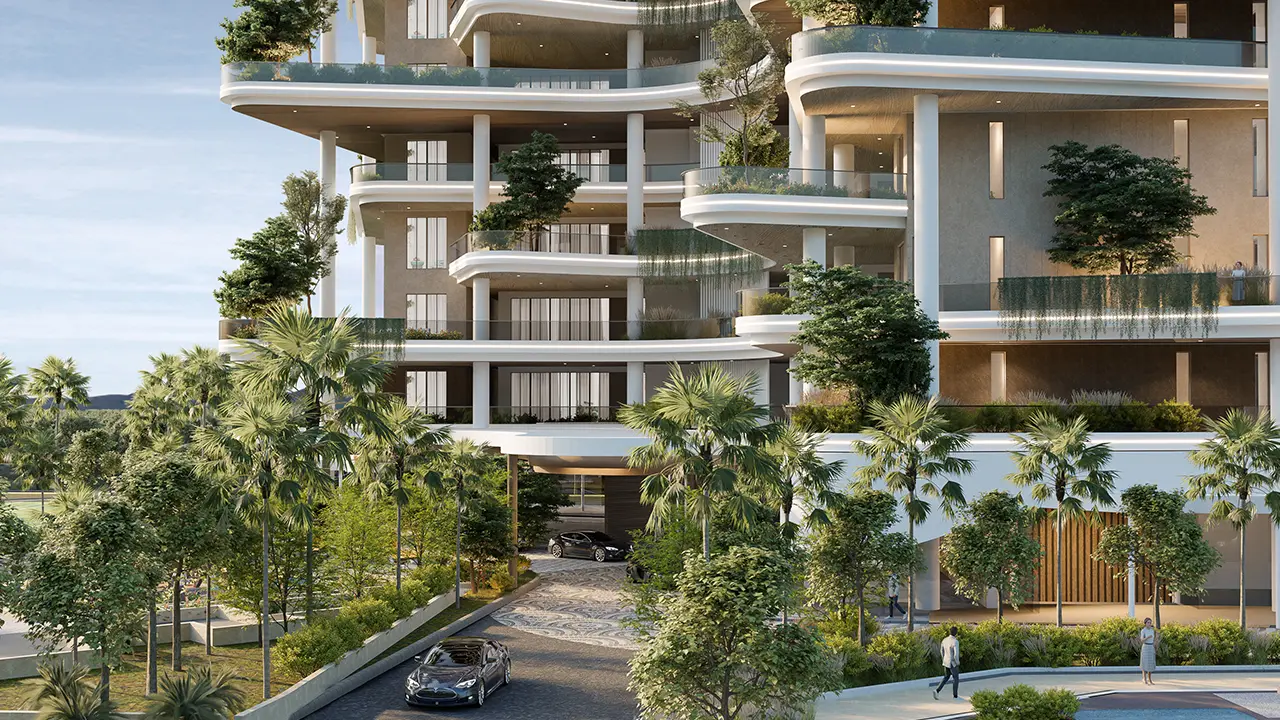
Chaithanya Sankhya, Budigere Road, Bengaluru
Chaithanya Sankhya
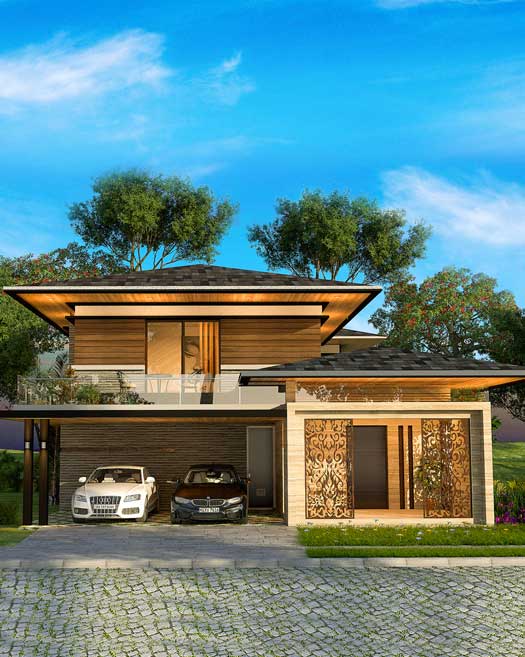
An ultra-luxury sky bungalow project in Budigere Cross offering just 44 exclusive units with private gardens, IBGC Platinum Pre-certified. Spacious 3-bedroom sky villas range from 6,496–6,677 sq. ft. Organic architecture, high-end finishes, and cutting-edge wellness technologies define the Sankhya lifestyle.
Customisation and Expansion Freedom
| Dimension | Villa | Apartment |
| Interior Layout Changes | Full freedom: walls, rooms, flooring | Limited; structural walls cannot be touched |
| External Facade | Constrained by community design guidelines | Not permitted |
| Adding Floors | Possible within plot, subject to RWA and approvals | Not possible |
| Private Pool Addition | Possible within plot boundary | Not possible |
| Home Office or Gym Addition | Possible as a dedicated room or structure | Only by sacrificing a bedroom |
| Garden Design | Entirely owner-determined | Not applicable |
- Villas offer significantly greater long-term flexibility, a new study, ground-floor parents’ suite, home gym, or floor extension as the family grows
- Apartments lock residents into a fixed footprint permanently; only interior cosmetic and functional modifications are possible
- For families planning a 10 to 20-year residency, a villa’s adaptability is a substantial practical advantage
Location and Accessibility
Location Comparison
| Factor | Villa | Apartment |
| Typical Location | Suburban corridors: Sarjapur, Budigere Cross, Devanahalli | Prime urban zones: Whitefield, Koramangala, HSR, Hebbal |
| Distance from IT Hubs | 20 to 45 minutes in Bangalore | 5 to 20 minutes |
| Metro Connectivity | Limited in current villa corridors | Strong: metro expansion benefits urban apartments most |
| Social Infrastructure | Growing rapidly in villa corridors | Fully established schools, hospitals, retail immediate |
| Environment | Green, low-density, resort-quality | Urban, high-density, commercially active |
| Daily Commute Impact | Longer, significant for regular office-goers | Shorter, strong daily convenience advantage |
- For buyers whose daily life is anchored in the city, regular commutes, school runs, hospital proximity, the apartment’s location advantage is real and meaningful
- For buyers who work from home, are retired, or can absorb the commute, the villa’s suburban setting delivers a quality of life no urban apartment can match
- Suburban villa corridors in Bangalore are rapidly maturing with improving schools, hospitals, retail, and metro connectivity, reducing the location trade-off over time
Cost and Running Expenses
Purchase Cost Comparison: Bangalore 2026
| Segment | Apartment Price Range | Villa Price Range |
| Entry Level | ₹40 L to ₹80 L (1 or 2 BHK) | ₹1.5 Cr+ (3 BHK, Kannamangala or Seegehalli) |
| Mid-Range | ₹80 L to ₹2 Cr (2 or 3 BHK) | ₹2 Cr to ₹5 Cr (3 or 4 BHK, Whitefield) |
| Premium | ₹2 Cr to ₹5 Cr (3 or 4 BHK luxury) | ₹5 Cr to ₹11.35 Cr+ (4 or 5 BHK, Budigere Cross) |
| Ultra-Luxury | ₹5 Cr to ₹15 Cr+ (penthouse) | ₹9.25 Cr to ₹11.35 Cr+ (sky bungalows) |
Monthly Running Cost Comparison
| Expense | Villa | Apartment |
| Utility Bills | ~₹24,750 per month | ~₹13,125 per month |
| Maintenance or Society Charges | ₹7,000 to ₹12,000 per month | ₹8,250 to ₹33,000 per month |
| Landscaping and Garden | ₹7,000 to ₹12,000 per month | Included in society charges |
| Property Tax | Higher: larger land area | Lower: smaller UDS |
| Security | Included in gated community charges | Included in society charges |
- Apartments appear more cost-efficient monthly, but villas deliver more value per sq. ft of actual living space when the private garden, terrace, and multi-floor layout are included
- For buyers with a 10+ year ownership horizon, villa land appreciation consistently outpaces the total cost differential at purchase
Investment Performance: Appreciation vs Rental Yield
Investment Comparison
| Metric | Villa | Apartment |
| Capital Appreciation (3 yrs) | 40% to 144% in premium corridors | 20% to 60% in prime urban corridors |
| Rental Yield | 2.5% to 3.5% | 3% to 4.5% |
| Tenant Placement Timeline | 60 to 120 days | 15 to 45 days |
| Resale Liquidity | Moderate: niche buyer pool | Higher: broad buyer pool |
| Land Appreciation | Strong: villa includes full land share | Limited: UDS is a small fraction |
| Building Depreciation Risk | Lower land holds value | Higher: structure depreciates over time |
| Best Investment Horizon | 5 to 15 years (wealth creation) | 2 to 7 years (rental yield and liquidity) |
The core investment logic:
- Villas: land ownership is the fundamental driver. As Bangalore’s suburban corridors mature and land becomes scarce, villa land value appreciates faster than any apartment
- Apartments: rental yield is the advantage. Bangalore’s IT-driven professional rental market creates consistent, high-velocity demand that villa corridors cannot match in the short term
- The verdict: buy a villa for long-term wealth creation and legacy, whereas buy an apartment for rental income, liquidity, and short-to-medium term appreciation
Bangalore-Specific Context (2026)
Top Villa Corridors
| Corridor | Why It Matters | 3-Year Appreciation |
| Budigere Cross | Fastest-appreciating corridor; premium developers | 100 to 144% |
| Sarjapur Road | Established villa hub; strong HNI and NRI demand | 50 to 70% |
| Devanahalli | Airport proximity; rapidly improving infrastructure | 45 to 65% |
| Whitefield | Mature IT corridors and established villa communities | 50 to 65% |
| Hennur and Kogilu | Emerging affordable zone; strong land value growth | 35 to 55% |
Top Apartment Corridors
| Corridor | Key Advantage |
| Whitefield | IT hub plus Namma Metro connectivity |
| Sarjapur Road | Major tech park access; consistent rental yield |
| Hebbal and Thanisandra | Airport corridor; infrastructure-driven appreciation |
| Koramangala and HSR | Premium tenants; highest rental yield in the city |
| KR Puram and Outer Ring Road | Metro expansion; high IT employment density |
Who Should Buy Which?
Buy a Villa If You:
- Are an HNI, UHNI, or senior professional for whom lifestyle quality and privacy outweigh location
- Have a multi-generational family needing genuine spatial zoning and private outdoor space
- Are an NRI returning to India expecting international-standard community living with professional management
- Want long-term wealth creation driven by land ownership and corridor appreciation
- Work from home or have a flexible commute and can absorb the suburban-location trade-off
- Value resort-quality daily living, like private garden, boutique community, outdoor access, as non-negotiable
Buy an Apartment If You:
- Are a first-time buyer or young professional prioritising urban convenience and an accessible entry price
- Have a regular daily commute to an IT park or office that makes urban proximity essential
- Want strong short-to-medium term rental yield from Bangalore’s IT professional rental market
- Prefer low-maintenance, society-managed living where all common areas are handled professionally
- Need faster resale liquidity: the apartment buyer pool is significantly broader and more active
- Have a smaller household, a couple, young family, or single professional, who does not need villa-scale space
Pros and Cons at a Glance
Villa
| Pros | Cons |
| Maximum privacy: no shared walls, floors, or ceilings | Higher upfront purchase price |
| Private garden, terrace, and outdoor space | A suburban location means a longer daily commute |
| Full customisation and expansion freedom | Higher utility bills and maintenance costs |
| Land ownership drives strong long-term appreciation | Fewer ready-to-move options available |
| Boutique community of like-minded HNI residents | Lower rental yield relative to apartments |
| Multi-generational zoning across floors | Maintenance responsibility even in gated communities |
Apartment
| Pros | Cons |
| More affordable entry price in prime locations | No private outdoor space: balcony only |
| Urban location close to offices, metro, and schools | Shared walls and floors create noise risk |
| Society manages all maintenance: genuinely low effort | Limited customisation: no structural changes |
| Strong rental yield from IT professional demand | Lower long-term appreciation due to smaller UDS |
| Faster resale liquidity and broader buyer pool | Building depreciation risk over time |
| Shared amenities at lower individual cost | A high-density community means less exclusivity |

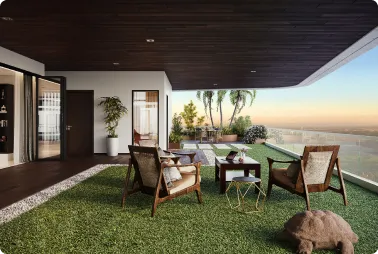
Garden Deck at Chaithanya Sankhya
Final Verdict: Villa or Apartment – Which One Fits Your Lifestyle?
The villa vs apartment decision is not about which property is objectively superior. It is a values alignment question that depends entirely on your life stage, your family composition, your financial horizon, and what you genuinely want your daily residential experience to feel like.
If you are a growing multi-generational family who values privacy, outdoor space, and a home that accommodates every member comfortably, and you are prepared to accept a suburban location in exchange for that quality of life, a villa in a premium gated community is the right choice. If you are an urban professional, a young family, or an investor seeking strong rental yields, liquidity, and the daily convenience of city living without the responsibilities of managing a larger independent home, an apartment in the right corridor is the clear answer.
What has changed in 2026 is that the best premium villa communities have closed the amenity and management gap significantly, offering resort-quality clubhouses, professional security, and managed green spaces that rival even the finest apartment complexes. For HNIs, UHNIs, and returning NRIs who have reached the life stage where lifestyle quality, privacy, and long-term wealth creation outweigh urban convenience, the villa is no longer a trade-off. It is simply the better home.