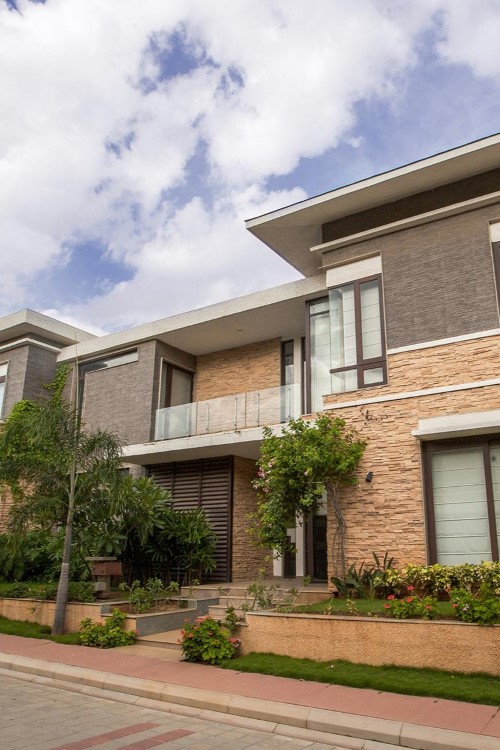

What Exactly Is a Villa?
The Origin
- The word “villa” originates from ancient Rome, where it described a grand country estate owned by the affluent class, combining residential grandeur with extensive grounds and architectural ambition
- Through the Renaissance and into modern Europe, the villa evolved into the definitive symbol of elevated private living: exclusive, architecturally considered, and set apart from the ordinary residential fabric of the city
- In India, the concept was reimagined by modern developers as the premium independent home format within master-planned gated communities

What a Villa Means in India in 2026
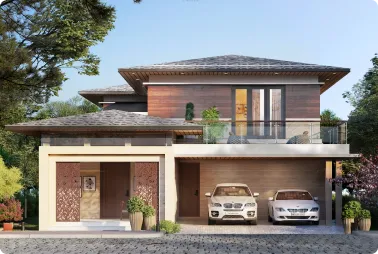
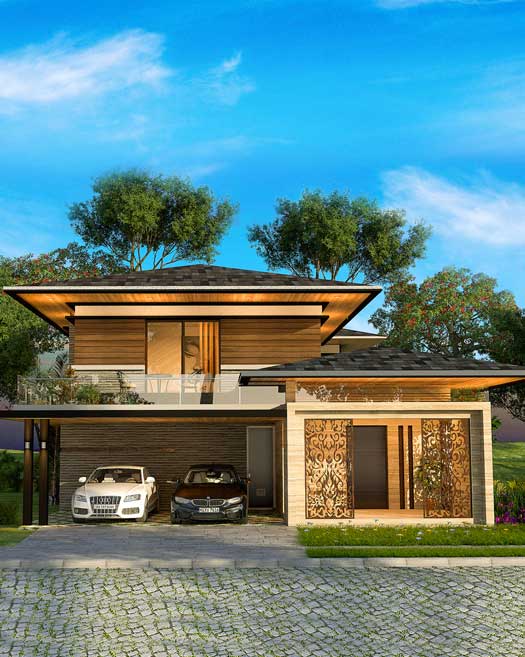
A modern Indian villa is a premium independent or semi-independent residence, typically G+1 or G+2 in format, within a well-planned gated community. It comes with:
- Its own private plot of land
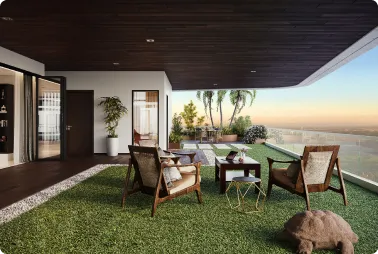
- Dedicated outdoor space: garden, courtyard, or terrace
- High-quality, architecturally distinct design
- Access to shared premium amenities: clubhouse, pool, gymnasium, sports courts
- Professional community security and management
Key Defining Characteristics
Characteristic | Description |
Private Plot | Every villa sits on its own dedicated land parcel |
Independent Structure | No shared floors, ceilings, or structural walls with neighbours |
Private Outdoor Space | Dedicated garden, courtyard, or terrace per villa |
Gated Community Setting | Professionally managed, secured, and landscaped community |
Premium Architecture | Distinct architectural identity and high-quality finishes |
Shared Amenity Infrastructure | Clubhouse, pool, gym, sports courts shared with residents |
Community Management | Professional facility management or RWA post-handover |
Typical Size | Starts at 2,500 sq. ft. and above |
The Core Difference: Community Context
The single most important distinction between a villa and an independent house is not the size, the architecture, or the price. It is the context in which you live.
An independent house:
- Sits on a standalone plot in a neighbourhood you did not design
- Is surrounded by neighbours you did not choose
- Has a street environment you cannot control
- Makes you solely responsible for security, maintenance, landscaping, and community character
A villa places you within:
- A thoughtfully planned, professionally managed residential ecosystem
- A community where architecture, landscape, security, and amenities are maintained to a consistent premium standard
- A curated neighbourhood of like-minded, high-achieving residents
- A managed environment that no individual independent house owner can single-handedly create or sustain
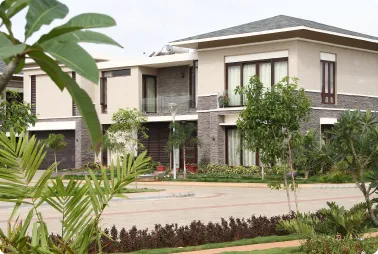
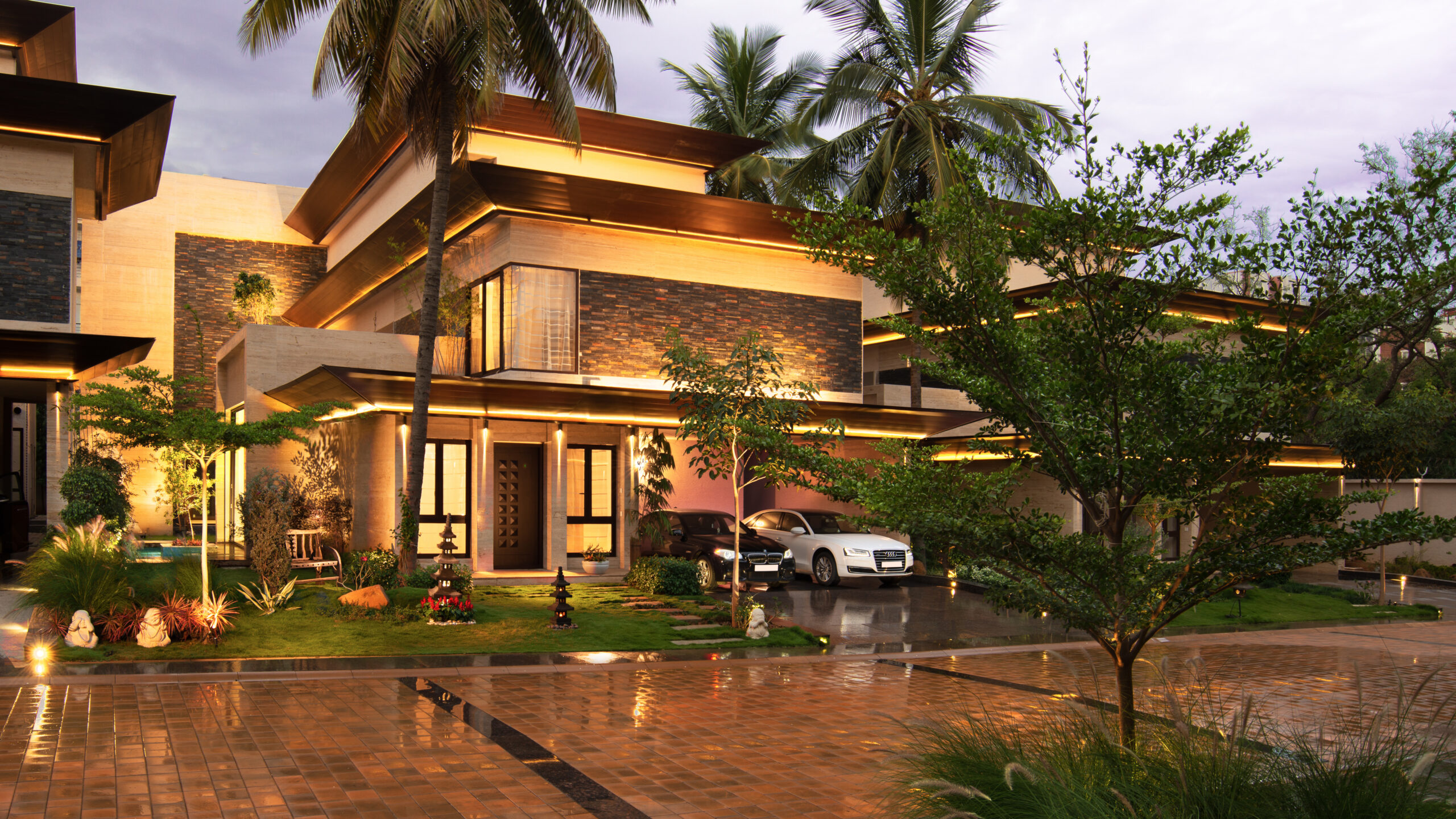
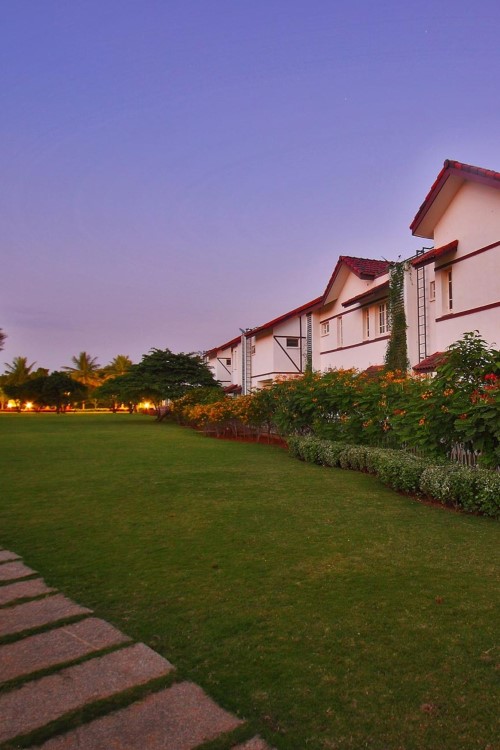
Take, for example, Chaithanya Samarth, a gated community of 163 green and plush villas that houses Bangalore’s elite. It is located in the tranquil setting of Budigere Cross, providing a peaceful retreat while still being close to the city centres.
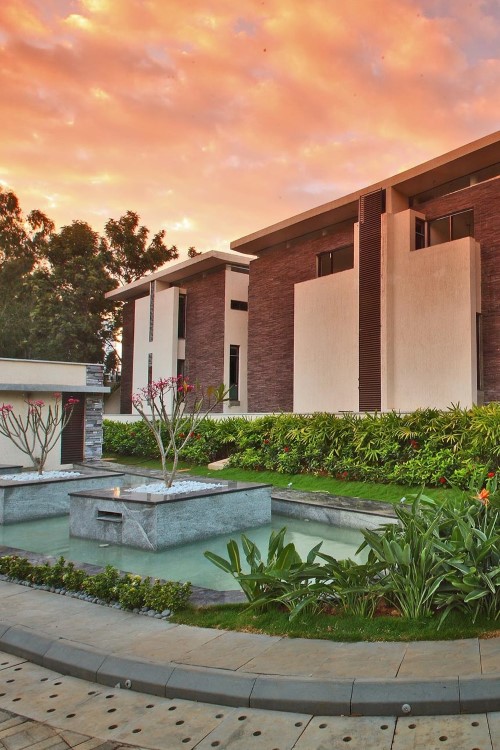
This community epitomises a sophisticated, well-kept society tailored to the high expectations of HNIs, UHNIs, and returning NRIs. Residents enjoy personal gardens and terrace balconies, alongside access to a resort-inspired clubhouse and premium leisure facilities: ideal for those seeking a meticulously designed villa lifestyle.

Villa vs House: 10 Dimensions That Matter
Master Comparison Table
Dimension | Villa | Independent House |
Ownership | Villa unit + proportionate land share | Full, unrestricted land and structure ownership |
Architecture | Planned, themed, premium quality by developer | Owner-determined : quality varies by budget |
Typical Size | 2,500 sq. ft. and above | 300 sq. ft. to 10,000+ sq. ft. |
Amenities | Shared premium: pool, gym, clubhouse, sports | Self-arranged : none included as standard |
Security | 24×7 gated, CCTV, biometric – institutionally managed | Owner’s sole responsibility |
Maintenance | Professional community management | The owner manages 100% independently |
Customisation | Limited by community and RWA guidelines | Complete freedom to build, expand, modify |
Resale Liquidity | Higher: RERA clarity, brand premium | Lower: title complexity, condition variability |
Appreciation | 40–144% in premium corridors (3 years) | 15–60%: highly location-dependent |
Starting Price (Bangalore) | ₹1.93 Cr to ₹11.35 Cr+ | ₹50 L+ (land + construction) |
1. Space and Design
- Villas begin at 2,500 sq. ft and are designed with a luxury-first spatial philosophy
- Every villa includes double-height living rooms, private gardens, large terraces, and dedicated work and leisure zones as structural features, not optional upgrades
- Independent house quality depends entirely on the owner’s budget and chosen architect
- The villa’s key advantage: every unit meets a defined, consistent quality standard; the buyer knows exactly what they are getting
2. Location and Setting
- Villa: Premium suburban or corridor locations: greener, lower-density, resort-quality, and master-planned
- Independent house: Any land parcel: urban street, village edge, mature suburb: neighbourhood quality unpredictable and uncontrolled
- In a gated villa community, the property next door cannot be neglected or redeveloped without community oversight. In an open neighbourhood, it can be.
3. Amenities and Lifestyle Infrastructure
What a typical villa community provides that an independent house cannot:
- Swimming pool and aqua gym: professionally maintained year-round
- Fully equipped gymnasium with professional-grade equipment
- Clubhouse with party hall, mini theatre, and lounge
- Tennis, badminton, squash courts, and cricket nets
- Landscaped parks, jogging tracks, children’s play areas, and pet zones
- All of the above maintained daily: zero per-use cost and zero management burden on the resident
A private swimming pool in a standalone house costs ₹20–40 lakhs to build and requires an ongoing maintenance team. In a villa community, it is included, immaculately maintained, and shared elegantly.

4. Privacy and Security
| Security Element | Villa | Independent House |
| Perimeter Control | Gated community with controlled entry | Open plot on public street |
| Entry Access | Biometric and manned 24×7 | Owner-arranged |
| CCTV | Community-wide perimeter surveillance | Owner’s responsibility |
| Security Staff | Professionally managed, always present | Hired and managed by owner |
| Management Burden on Resident | Zero: fully outsourced | 100% owner’s responsibility |
5. Customisation and Construction Freedom
Villa – What you can do:
- Interior modifications, cosmetic changes, and light renovations
- Personalise interiors, flooring, fixtures, and fittings freely within the villa
Villa – What you cannot do:
- Add floors or extend the structural footprint
- Modify the external facade or roofline
- Make structural changes without RWA and approval clearance
Independent house – What you can do:
- Design every element from scratch with your own architect
- Expand, add floors, or redevelop the entire property at any time
- Modify, renovate, or repurpose the structure freely, on your own time
6. Maintenance and Management
Villa resident’s responsibility:
- Interior of the home only: plumbing, electrical, and fittings within the villa boundary
- Community management handles everything else
Independent house owner’s responsibility:
- Structural repairs and periodic assessments
- Plumbing and electrical infrastructure end-to-end
- Landscaping and garden maintenance
- Security guards: hiring, managing, and replacing
- Power backup systems: generator or inverter maintenance
- All of the above: ongoing, daily, and often unpredictable
7. Cost Structure
| Cost Element | Villa | Independent House |
| Purchase Price | Fixed, RERA-registered, transparent | Land + construction + approvals + design + interiors |
| Home Loan Access | Easy, developer tie-ups, RERA documentation | More complex, especially for resale or self-constructed |
| Cost Overruns | None, fixed-price contract | Routinely 20–40% above initial estimate |
| Construction Timeline | Developer-managed, defined schedule | Owner-managed, delays common |
| Monthly Charges | Maintenance charges (₹5,000–₹25,000/month) | Self-arranged security and maintenance |
8. Investment Performance
| Investment Metric | Villa (Gated Community) | Independent House |
| 3-Year Appreciation | 40% to 144% (premium corridors) | 15% to 60% (location-dependent) |
| Rental Yield | 2.5% to 4.5% | 2% to 4% |
| Resale Speed | Faster, clear title, brand recognition | Slower, title clarity and condition-dependent |
| Home Loan Access | Easier: RERA compliance | More complex for older/resale properties |
| NRI Investment Ease | High | Moderate |
Villa vs Duplex House: Clearing the Confusion
| Factor | Villa | Duplex House |
| Structure | G+1, G+2, or larger | Typically G+1 (2 floors) |
| Community | Premium gated, professionally managed | Standalone or small complex |
| Amenities | Pool, gym, clubhouse, sports courts | Usually self-arranged |
| Security | 24×7 institutional-grade | Owner-managed |
| Private Garden | Dedicated per villa | Sometimes: not always |
| Price | Premium | More affordable |
| Best For | HNIs, UHNIs, lifestyle buyers | Families seeking private multi-floor living |
Key clarifications:
- A duplex is a structural description: two floors, one family. It says nothing about community, amenities, or management quality
- A villa is a property category, which can include duplex, triplex, or larger formats, within a premium gated community with a full ecosystem of infrastructure
- Many of India’s finest luxury villas are G+1 (duplex) in structure, but the villa label always carries the additional promise of community quality that a standalone duplex never delivers

Villa vs Apartment: The Upgrade Decision
Factor | Villa | Apartment |
Privacy | Very high: own land, garden, compound | Low: shared building and floors |
Space | 2,500 to 10,000+ sq. ft. | 900 to 3,500 sq. ft. typically |
Outdoor Space | Dedicated private garden and terrace | Shared or limited balcony only |
Noise | Minimal standalone structure | Higher: shared walls, floors, lifts |
Entry Price | Higher | Lower |
Children | Garden, play zones, open space | Very limited outdoor access |
Appreciation | Stronger in premium corridors | Moderate |
Best For | Multi-generational families, HNIs, NRIs | Urban professionals, first-time buyers |
Who Should Buy a Villa vs an Independent House?
Buy a Villa If You:
- Want a premium, ready-to-move lifestyle without managing construction or maintenance
- Are an HNI, UHNI, or NRI returning to India expecting international community living standards
- Have a multi-generational family: grandparents, parents, children, needing space and daily lifestyle infrastructure
- Want professional security and management without daily involvement
- Prioritise strong, predictable investment appreciation in a RERA-compliant branded asset
- Consider resort-quality amenities: a pool, gym, sports, and walking trails, non-negotiable in daily life.

Buy an Independent House If You:
- Want complete, unrestricted freedom to design and build exactly as you envision
- Prefer full land ownership without community guidelines or RWA constraints
- Are building on a prime urban plot where gated villa communities are unavailable
- Have deep local knowledge of land titles, construction management, and regulatory approvals
- Are planning a long-term legacy property where land value alone justifies the investment
- Are comfortable managing security, maintenance, and all utilities independently.
Pros and Cons Summary
Villa
| Pros | Cons |
| Premium lifestyle with resort-style amenities | Purchase price higher |
| Community and professional security management | Limited structural customisation |
| Private outdoor space, terrace and garden | Monthly service charges |
| Better appreciation in the corridors of gated communities | Longer city commutes, suburban usually |
| Hassle-free home loan and transparent RERA paperwork | Full individual title or proportionate land share |
| Community of like-minded residents curated | RWA regulations control modifications |
Independent House
| Pros | Cons |
| Freehold land and building in fee simple | No common facilities unless privately arranged |
| Freedom to design and build completely | The owner is responsible for security and maintenance |
| Can be in prime city locations | Construction: higher management burden |
| There are no community rules or monthly maintenance fees. | Appreciation varies greatly by location |
| Unlimited scope for expansion and redevelopment | Resale may be more difficult and slower. |
Villa vs House: Which One Should You Choose in 2026?
The villa vs house decision is not about which format is objectively better. It’s about what’s best for you now, with your family, finances, and vision of home each morning. Both are legitimate, powerful residential choices. The key is understanding which one aligns with your actual life, not just your aspirations on paper.
Choose a villa when lifestyle completeness, management-free daily living, community quality, and branded investment performance matter more to you than creative design freedom. Choose an independent house when full land ownership, architectural autonomy, prime urban location access, and long-term land value appreciation are your defining priorities.
The best villas, designed and delivered by India’s finest developers, narrow this gap significantly. They combine the privacy and spatial quality of a genuine independent home with the resort-quality community life, professional management, and investment-grade documentation that no standalone property can offer. If you are a returning NRI, a senior HNI professional entering the finest chapter of your life, or a multi-generational family seeking a home that serves every member beautifully, a premium gated villa community is not just the right choice. It is the only choice that truly delivers everything you deserve.